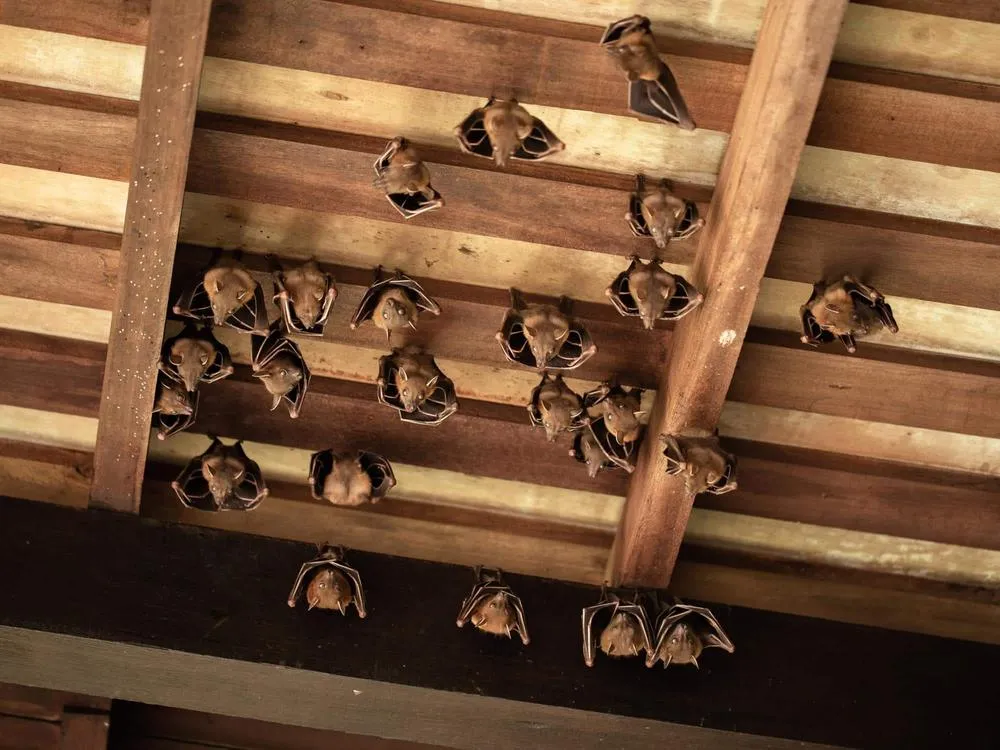
Why Bat Removal is Critical for Your Home
A few bats in the attic rarely stay a few. Knox County's older farmhouses and additions around Mount Vernon and Johnstown give colonies plenty of gaps to slip through, and a roost left alone grows year after year. Timing the call matters here: bats raise pups through summer, so the right window for bat exclusion opens in fall. October is the sweet spot—young bats are flying and you can close the house up before cold weather pushes the colony deeper indoors.
Caudill starts with a full inspection, tracking the exact gaps, vents, and rooflines where bats are getting in. Then we install one-way devices that let the colony leave but not return, and seal those openings so they stay out. Bat removal isn't finished until the house is bat-proofed, so we follow up to confirm the roost is empty and the exclusion held. We also clean up after the colony and close the smaller entry points that invite the next one.
Signs You Need This Service
- Hearing scratching or fluttering at night, especially in the attic, walls, or chimney, often points to bats roosting above living spaces. The sounds are most noticeable around dusk and dawn.
- Finding small, dark droppings (guano) on attic insulation, window sills, porches, or below rooflines is a common sign of an active bat colony. Guano buildup can create health and odor issues over time.
- A strong, persistent ammonia-like smell coming from upper rooms or the attic can be caused by bat urine and guano. Odors usually get worse as the colony grows.
- Dark smudges or staining near soffits, gable vents, chimneys, or roof joints can indicate a frequent entry point. These marks are often left where bats repeatedly squeeze in and out.
- Seeing bats exit the home at dusk or finding a bat indoors suggests bats are gaining access to the structure. Even a single indoor sighting is a good reason to schedule an inspection.
Our Process
Full Home Inspection
We inspect your attic, roofline, vents, chimney areas, and any suspected entry points to confirm bat activity and assess the scope of the problem.
Entry Point Mapping and Plan
We identify how bats are getting in and out, then build a removal plan that follows humane exclusion methods and local wildlife rules.
Humane Exclusion and Removal
We install one-way exclusion devices that allow bats to leave safely but prevent them from re-entering, clearing the structure without harming the animals.
Guano Cleanup and Sanitizing
After the bats are out, we remove droppings and contaminated materials where needed, then sanitize affected areas to reduce odor and health risks.
Sealing and Prevention
We seal entry points and reinforce vulnerable areas with bat-proof materials to help prevent future infestations and keep your home protected.