
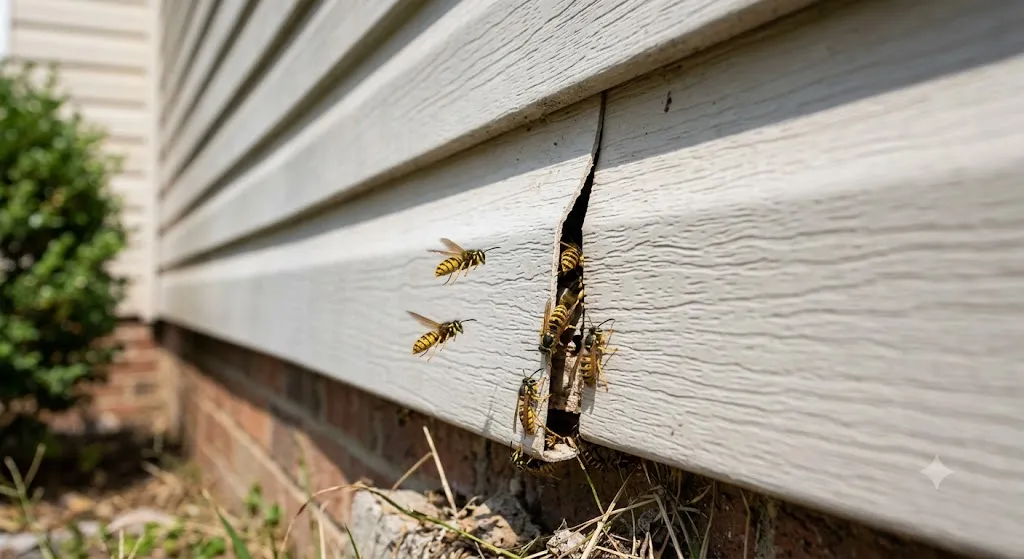
Yellow Jacket Nest in a Wall? Here's What to Do (and What Not to Do)
Yellow Jacket Nest in a Wall? Don't Plug That Hole
If you're watching yellow jackets stream in and out of a gap in your siding, soffit, or brick, you almost certainly have a yellow jacket nest inside the wall — and how you react in the next few minutes matters. The single most common (and worst) mistake homeowners make is sealing the entry hole. Here's what to do instead.
How to know the nest is in the wall
Steady two-way traffic at one specific gap — siding seams, around utility lines, soffits, or weep holes in brick — is the giveaway. You may also hear faint buzzing or rustling inside the wall, especially on warm afternoons when the colony is active.
Why you should never plug the entry hole
It feels logical, but it's the one thing guaranteed to make it worse. Trapped yellow jackets don't die quietly — they chew sideways and inward, and a colony of thousands will often find its way into your living space (through outlets, vents, and light fixtures) looking for a way out. Sealing the hole turns an outdoor problem into an indoor one.
Why store-bought spray usually fails on wall nests
Aerosol "wasp killer" only reaches the few inches inside the entry point. The actual nest can sit a foot or more back in the wall void, so you kill the doorway guards while the colony keeps producing. It also agitates the nest right where you're standing.
How a professional removes an in-wall nest
At Caudill Pest Control, we treat in-wall nests by injecting a professional product directly into the void through the entry point, so it carries through the whole colony. We leave the hole open until the nest is dead, then advise on sealing it afterward to prevent re-nesting. (For more on the season, see our yellow jacket season guide.)
Frequently Asked Questions
Will the yellow jackets leave on their own? The colony dies off in winter, but a nest left active through fall keeps growing more aggressive, and the void can be reused next year. It's best to treat it.
Is a yellow jacket nest in a wall dangerous? Yes — they sting repeatedly and can move indoors if disturbed. People with allergies should keep well clear and call a professional.
Do I need to remove the nest after it's treated? The nest material itself can usually stay, but the entry point should be sealed once the colony is dead so it isn't reused.
In-wall nest in Centerburg or Central Ohio?
Don't risk it — and definitely don't plug the hole. Call Caudill Pest Control at (740) 507-1688 or contact us for a quote and we'll treat the nest at the source.