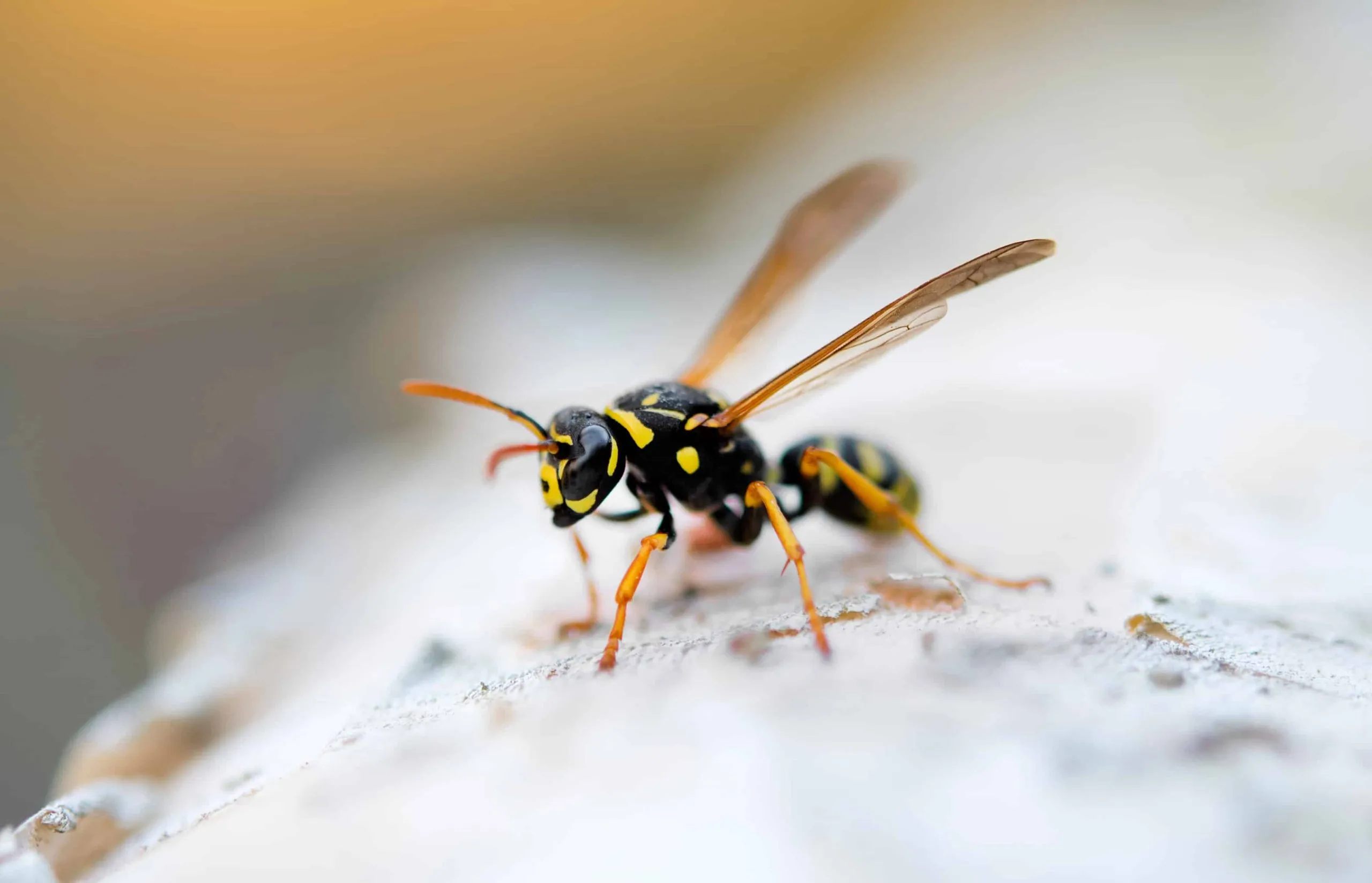
Why Yellow Jacket Control is Critical for Your Home
Yellow jackets get worse as the year goes on. From August into October, Knox County colonies hit peak size and their shortest tempers, swarming patios, trash cans, and anyone who steps near a hidden ground nest in Mount Vernon or Johnstown yards. A nest that looked minor in June can hold thousands of stinging workers by Labor Day, which is exactly why timing the call for late summer keeps a backyard usable.
Caudill starts by tracking down every nest, since yellow jackets tuck them in walls, soffits, and underground where one entry hole hides a busy colony. We treat the nest directly, then handle the wasp removal and clear out leftover activity so foragers stop returning. From there we seal the gaps and entry points that invited them in, and a calm follow-up from your yellow jacket exterminator confirms the colony is done for good.
Signs You Need This Service
- Frequent yellow jacket sightings in one area like a porch corner, landscaping edge, or near siding, often means there’s a nearby nest they’re defending. You’ll see them repeatedly flying in and out of the same spot.
- A steady stream of insects entering a hole or crack in the ground, wall, or soffit is a strong sign of an active nest. Yellow jackets use small openings but can have large colonies inside.
- Sudden aggressive behavior when mowing, trimming bushes, or walking near a specific area often indicates you’re close to a nest. They’re much more defensive than most other wasps.
- A visible paper nest under eaves, inside sheds, or attached to beams can sometimes be spotted early. Many nests are hidden, but you may notice buzzing or movement around a concealed area.
- Yellow jackets hovering around trash cans, food, or sweet drinks can indicate a colony nearby, especially in late summer when they become more persistent. If they’re constantly present even without food out, there’s likely a nest close.
Our Process
Inspection & Nest Location
We start by inspecting your property to locate yellow jacket nesting sites and confirm the level of activity. Many nests are hidden in the ground, wall voids, soffits, or landscaping, so identifying the exact entry point is critical. Once we find the source, we build a plan that targets the problem safely and effectively.
Safe, Targeted Treatment
Our technicians use professional-grade tools, protective gear, and proven application methods to eliminate yellow jackets at the nest. Treatments are timed for when yellow jackets are less active, which improves results and reduces risk. We focus on solving the infestation at the source, not just knocking down the ones you see flying around.
Nest Elimination & Activity Monitoring
After treatment, we verify that nest activity drops significantly and confirm the area is returning to normal. Yellow jacket pressure should decrease quickly, but heavy infestations may require additional monitoring to ensure full control. We’ll guide you on what to expect in the hours and days following service.
Prevention Recommendations
Once the infestation is resolved, we help reduce the chances of yellow jackets returning. This includes sealing entry points, limiting food sources like open trash or pet bowls, and keeping outdoor areas clean and low-attractant. We also recommend seasonal inspections if your property has a history of recurring activity.